
































How to Compare Virtual Data Room Providers
Choosing the right virtual data room provider isn’t just about comparing features or pricing, it's about finding a platform that fits how your team actually works. The best virtual data room for an enterprise M&A transaction will look very different from one used for due diligence, fundraising, or ongoing document sharing.
With dozens of virtual data room providers available, the key is to focus on the factors that directly impact usability, security, and deal execution, rather than getting lost in long feature lists.
What Actually Matters When Comparing VDR Providers
Key Factors to Focus On
Security and compliance should always be the starting point. Most leading virtual data room providers offer enterprise-grade protection, but it’s still important to verify certifications such as ISO 27001, SOC 2 compliance, encryption standards, and multi-factor authentication especially when handling sensitive financial or legal documents.
Access control and permissions become critical as soon as multiple stakeholders are involved. The ability to manage who can view, download, or interact with documents (down to a granular level) is essential for maintaining control throughout a transaction.
Document management and organisation can have a major impact on efficiency. Features like bulk upload, version control, auto-indexing, and full-text search make it significantly easier to manage large volumes of documents, particularly during due diligence.
For M&A and due diligence workflows, Q&A functionality is one of the most important features to evaluate. A well-structured Q&A module helps centralise communication, reduce email back-and-forth, and maintain a clear audit trail of all interactions.
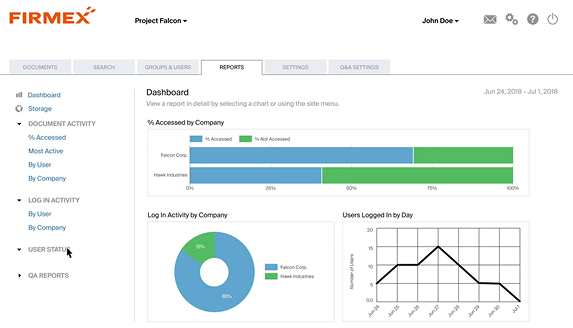
Analytics and reporting can provide valuable insights during a transaction. Many virtual data room providers now offer user activity tracking and engagement analytics, helping teams understand which documents are being viewed and where interest is highest.
Finally, usability and support are often underestimated. A virtual data room should be easy for both internal teams and external stakeholders to navigate especially under time pressure. Reliable support, particularly during live deals, can make a significant difference.
A More Practical Way to Compare
Instead of trying to evaluate every virtual data room provider at once, start by narrowing your shortlist based on your use case. For example, M&A, due diligence, or ongoing collaboration. From there, compare two or three providers side by side using real scenarios, such as uploading documents, managing permissions, and testing the Q&A workflow.
This approach gives you a much clearer understanding of how each platform performs in practice, which is often more valuable than comparing feature lists alone.

The best virtual data room provider isn’t necessarily the one with the most features but the one that fits how you work, is easy for your stakeholders to use, and helps your team move faster with confidence. Choosing the right virtual data room provider depends on your specific needs, budget, and transaction type. Comparing multiple VDR providers and testing platforms through free trials is the best way to make an informed decision.